
In the world of industrial manufacturing and construction, there is a well-known proverb: “For want of a nail… the kingdom was lost.”
While it is a simple illustration of the domino effect, it holds a profound truth for modern procurement personnel.
When you are responsible for sourcing components that are critical to your company’s manufacturing, assembly, or distribution, you know that procurement is about far more than a negotiated cost per unit. It is about managing risk.
To prevent potential quality issues, you need to partner with a supplier that can prove its quality through rigorous certifications and transparent documentation.
Here is a guide to the quality benchmarks and documentation you should expect from your fastener provider.
1. Quality Management System (QMS) Certifications
A Quality Management System is the framework that ensures a supplier’s processes are consistent and reliable. Standards set benchmarks that build trust and simplify your choices.
- ISO 9001:2015: This is the international gold standard for quality management. It requires a facility to demonstrate a strong customer focus, a process-oriented approach, and a commitment to continuous improvement. When a provider holds this certification, it means they have a framework in place to ensure you receive the same level of quality on every order.
- API Spec Q1: For those in the oil and gas or petrochemical industries, this is an essential requirement. It is a more specialized quality management standard, written specifically for the petroleum industry, that ensures a facility can meet stringent technical requirements for critical applications.
2. Laboratory Accreditations and Testing
It is one thing for a supplier to say they test their parts; it is another to have a laboratory that is independently accredited to do so. In the fastener world, testing is critical to verify conformance to specifications and ensure the safety of the final product.
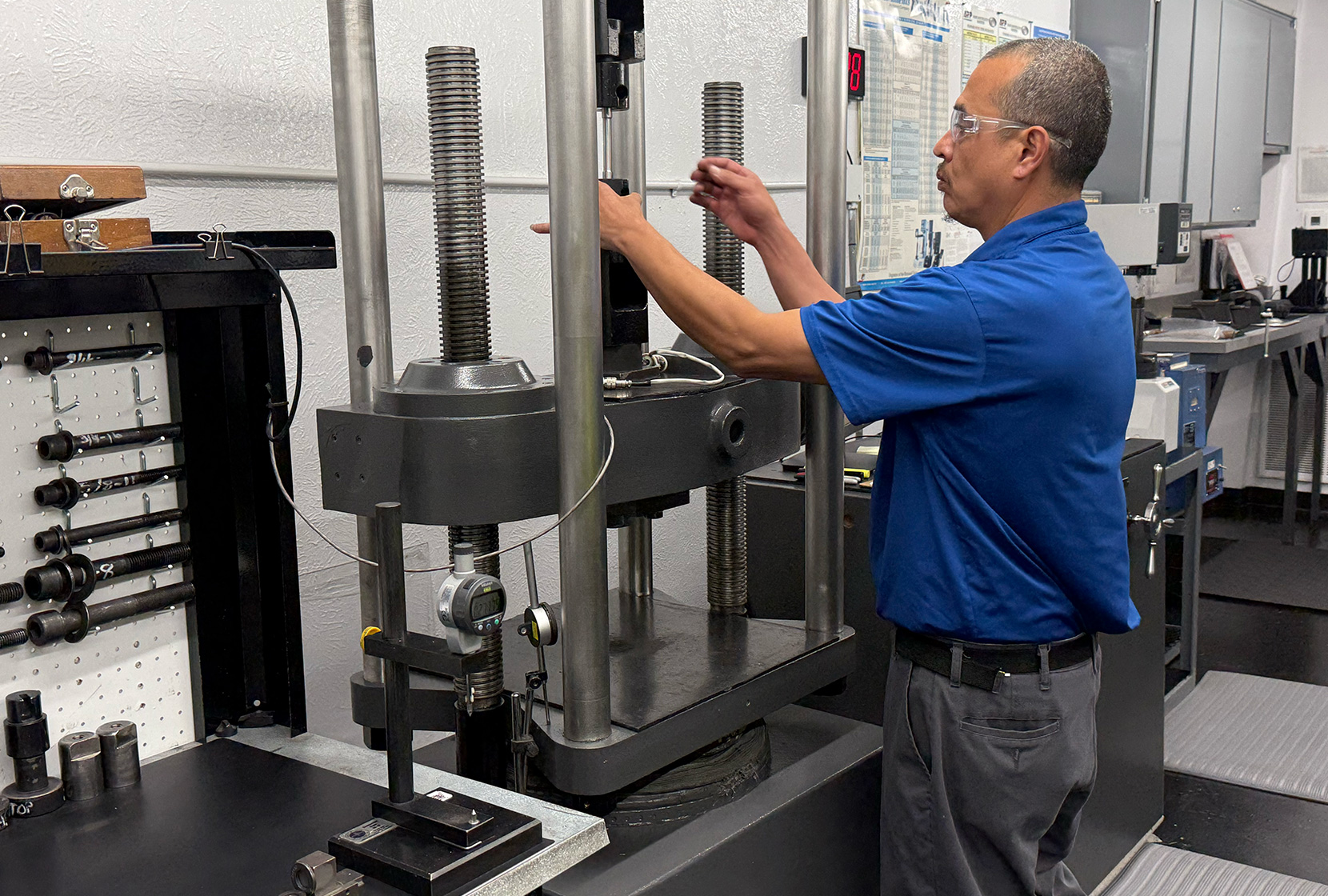
- A2LA Accreditation & ISO/IEC 17025: You should look for a provider with an in-house laboratory that holds A2LA accreditation in accordance with International Standard ISO/IEC 17025. This accreditation confirms the laboratory’s competence in performing specific tests, such as proof load, tensile testing (up to 400,000 lbs.), hardness testing, and Charpy impact testing.
- The Difference Accreditation Makes: Having an accredited lab on-site means that every manufactured or distributed fastener is subject to proper testing before it ships to your facility. This provides a level of confidence that standard distributors simply cannot match.
3. Industry-Specific Monogram Licenses
For highly specialized markets, general certifications may not be enough. Industry-specific licenses provide verification that products meet the most demanding performance standards.
- API 20E and 20F: These represent the most rigorous bolting performance specifications in the oil and gas industry. An API 20E license (for alloy and carbon steel) or an API 20F license (for corrosion-resistant bolting) allows a manufacturer to physically mark products with the API Monogram. This gives you confidence that your hardware is traceable and meets global safety criteria. API 20E also establishes three bolting specification levels: BSL-1, BSL-2, and BSL-3. The levels increase with the consequences of bolt failure, with BSL-3 representing the most critical joints.
4. Essential Quality Documentation
Documentation is the paper trail that validates the integrity of your supply chain. You should always be able to request and receive the following:
- Material Test Reports (MTRs): These reports provide the chemical and physical analysis of the steel used to manufacture your fasteners. You should expect complete MTRs for all domestic, high-strength, and custom-manufactured hardware.
- Lot Traceability: A quality provider must maintain 100% digital lot-to-job traceability. This allows any fastener to be traced back through the system, from the finished product to the original mill. This is essential for risk mitigation and regulatory compliance.
- Letters of Compliance: For standard hardware where a full MTR may not be required, a Letter of Compliance confirms that the parts meet the ordered specifications.
5. Regulatory and Ethical Compliance
In today’s market, quality also includes ethical sourcing and environmental safety.
- Conflict Minerals Disclosure: Under the Dodd-Frank Act, companies are often required to identify if their products contain minerals (such as tin, tantalum, tungsten, or gold) originating from conflict zones. A reliable supplier should have a proactive policy and due diligence inquiries in place to ensure a conflict-free supply chain.
- California Proposition 65: Even if you aren’t based in California, many companies require Prop 65 warning notifications on all products to remain compliant with retail display and safety regulations.
Moving Beyond the Price Tag
While the price of a fastener is easy to measure, the value of a certified, reliable supply chain is difficult to overestimate. By selecting a partner who can provide these certifications and documents, you are shifting your focus from price to total value.
You are ensuring that your company has the people, products, and verified quality processes required to keep production moving without delay.
When you interview your next fastener provider, don’t just ask about their inventory – ask to see their ISO 9001 certificate and their A2LA accreditation. Your production line will thank you.
Complete Quality Confidence with All-Pro
At All-Pro Fasteners, we take quality seriously, which is why we house one of the most advanced quality labs in the industry. We also recognize that quality means transparency, which is why we make documentation like that mentioned in this blog freely available.
Contact us today to learn more about our quality program and how it helps you save money.
- Call us at 800-361-6627
- Find an expert in your industry by emailing [email protected]
- Or start a conversation by submitting a contact form